Flying Delta? You’re likely weighing whether to splurge on a premium seat—but here’s the twist: Delta doesn’t actually operate traditional “first class” on international flights. What most travelers call “Delta first class vs business class” is really a comparison between Domestic First Class (found on short-haul flights within North America) and Delta One (their premium business class product on long-haul international routes).
This distinction matters more than you might think. Domestic First Class offers wider leather seats, complimentary meals, and priority boarding on your coast-to-coast journey. Delta One? That’s a completely different beast—lie-flat suites with doors, chef-curated meals, and amenity kits that feel more boutique hotel than airplane. According to Delta’s official onboard experience guide, these aren’t just different price points—they’re fundamentally different products designed for different types of travel. The real question isn’t which is “better”—it’s which matches your flight. A three-hour domestic hop doesn’t need a $4,000 suite, while a transatlantic red-eye absolutely benefits from a bed. Understanding what each cabin actually delivers—and where Delta’s premium offerings rank against competitors—can save you hundreds of dollars or dramatically upgrade your comfort. Let’s break down exactly what you’re paying for in each cabin.
Overview of Delta’s First Class and Business Class
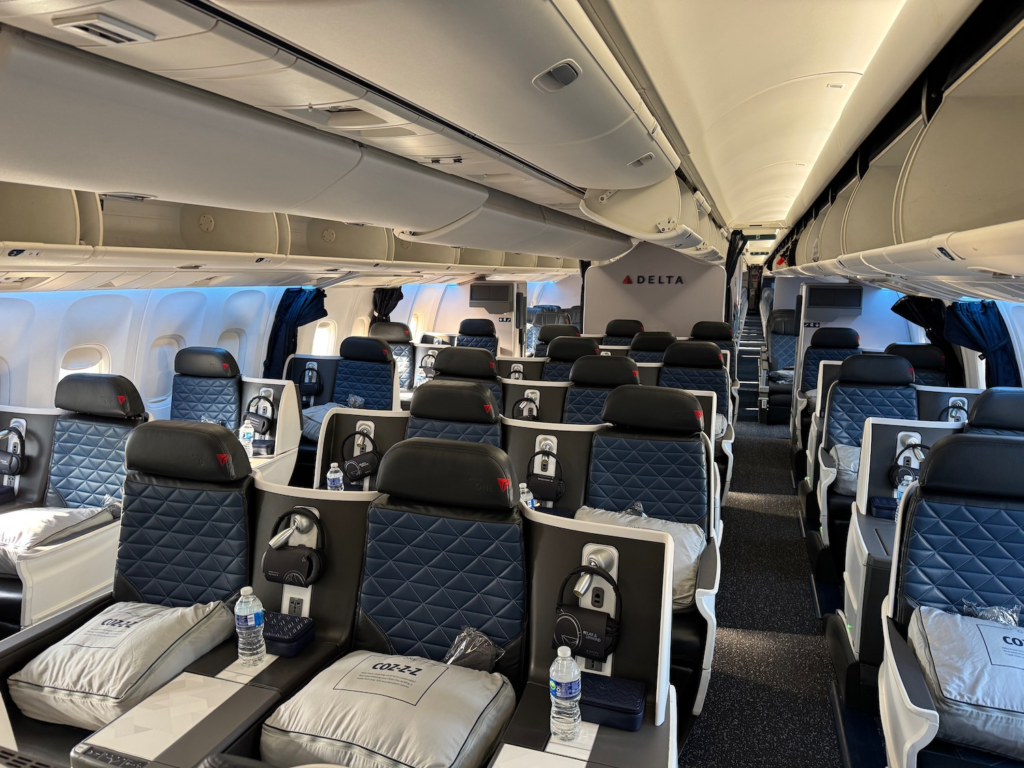
Here’s where things get interesting—and a bit confusing. Delta’s cabin structure doesn’t follow the traditional airline hierarchy you might expect.
On domestic routes, Delta First Class sits at the front of the plane. You’ll find wider leather seats, more legroom than Main Cabin, and complimentary meals with cocktails. It’s positioned as the premium option for flights within the U.S. and to nearby international destinations like Mexico or the Caribbean.
For long-haul international flights, however, Delta One represents the airline’s top-tier product. This is Delta’s true business class—featuring lie-flat seats or suites with sliding doors on select aircraft. The confusion? Delta One occupies what other airlines would call “business class,” but Delta reserves “First Class” for domestic routes only.
The Delta One vs first class distinction matters because they serve different travel contexts. Delta One comes with dedicated check-in, premium lounge access, elevated dining with multi-course meals, and those coveted flat-bed seats. First Class offers comfort upgrades without the full luxury treatment.
Think of it this way: First Class is your upgraded domestic experience, while Delta One is built for international travel where you need to arrive rested. Different aircraft configurations mean your Delta One experience varies too—some planes feature enclosed suites, while others have traditional business-class seating.
Comparative Analysis: Comfort and Seating
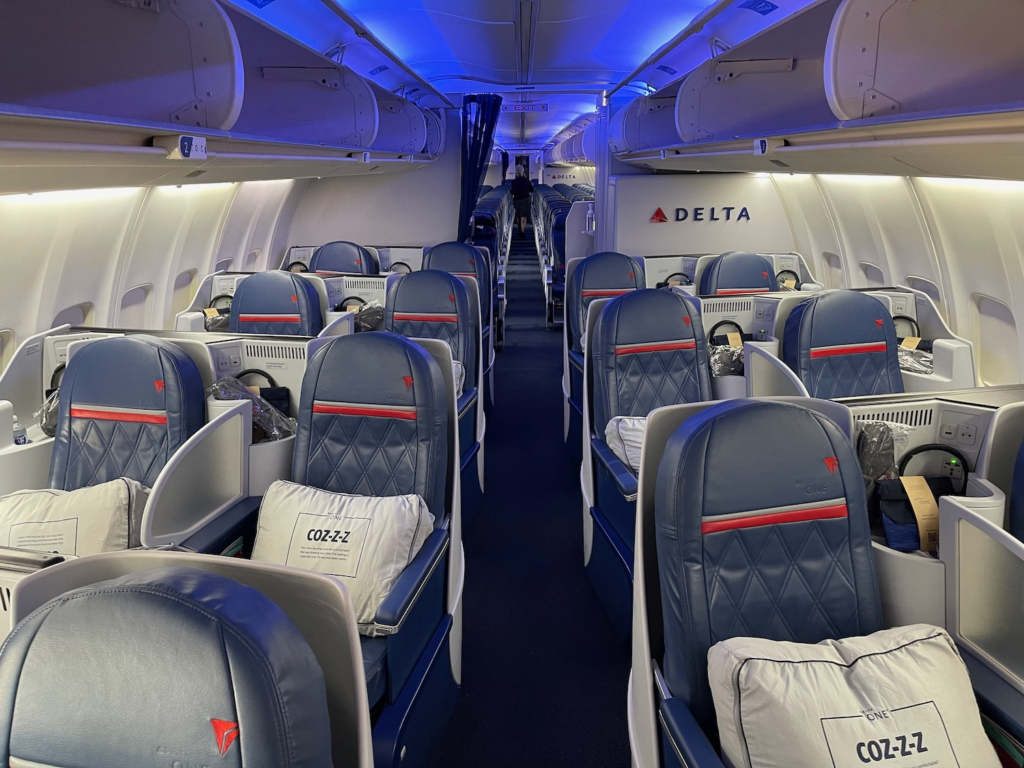
When comparing Delta business class vs first class, the comfort differences are striking—though they might not be what you’d expect based on cabin names alone.
On domestic routes, Delta First Class offers standard recliner seats with 21 inches of width, 37 inches of pitch—noticeably more spacious than Main Cabin, and but still far from lie-flat luxury. According to comparisons of Delta’s domestic first-class seats, these seats compete directly with United’s domestic first class offerings, featuring similar reclining mechanisms and legroom. Delta One, meanwhile, delivers true business class comfort with fully lie-flat seats. The game-changer? Delta One Suites on select aircraft feature sliding doors that create your own private pod—something you won’t find in domestic First Class. Delta One’s suite configurations vary by aircraft, with the A350 and A330-900neo offering the most premium experience.
Here’s the practical reality: if you’re 6’2″ and hoping to sleep on a cross-country flight, domestic First Class will leave you disappointed. The recliners simply don’t recline far enough for comfortable sleeping, regardless of your height. Delta One’s lie-flat beds, however, transform overnight flights into genuinely restful experiences—a difference that justifies the price gap on longer routes.
Amenities and In-flight Services
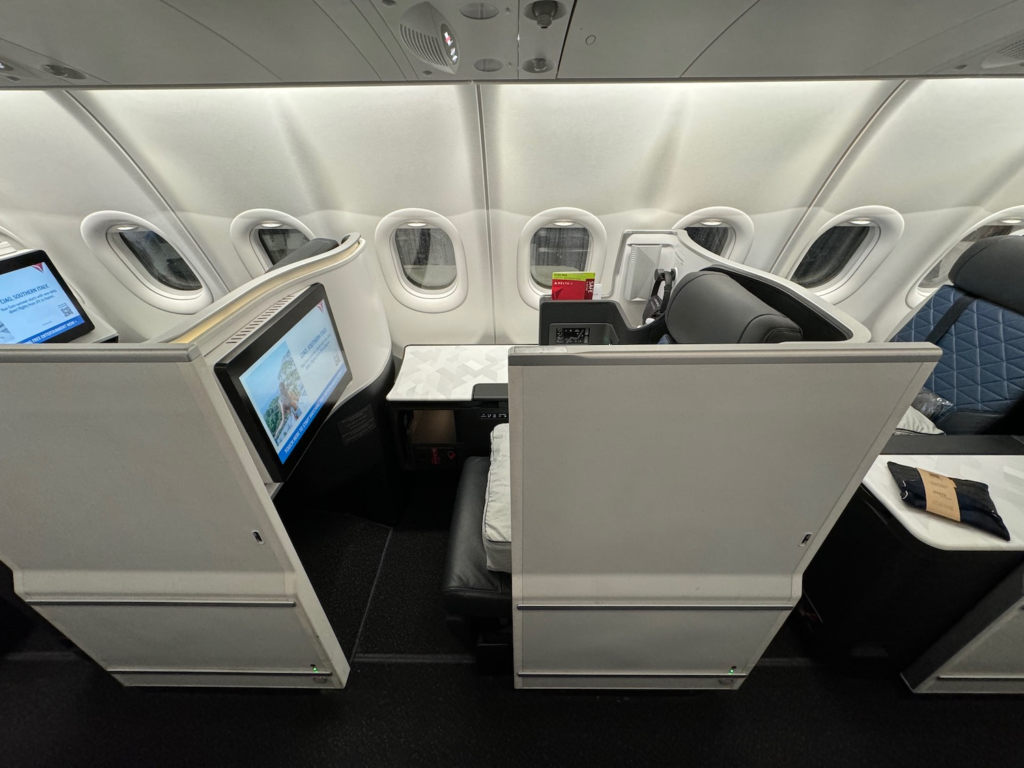
Beyond the seats themselves, the amenity gap between Delta One and domestic first class is substantial—and this is where premium transcontinental and international travelers really see their money’s worth.
On Delta One flights, you’ll receive premium bedding including a mattress pad, pillow, and duvet, along with Tumi amenity kits stocked with skincare essentials. The meal service elevates accordingly: multi-course dining with plated presentations, premium wine selections, and pre-arrival light bites. Some Delta One routes even feature chef-curated seasonal menus that rival upscale restaurants. Domestic first class takes a more modest approach. You’ll get a pillow and light blanket, but no bedding package. Meals are typically single-tray service—still a step up from Main Cabin, but without the white-tablecloth presentation. On shorter flights under two hours, you might only see an expanded snack basket rather than a full meal.
The beverage service remains impressive across both cabins, with complimentary premium spirits, wine, and beer. However, Delta One passengers get priority treatment and often access to rarer bottles from Delta’s wine program.
One consistent bright spot: both cabins offer free Wi-Fi for messaging, though you’ll need to purchase connectivity for streaming or heavy browsing.
Delta first class vs. business class: Cabin experience
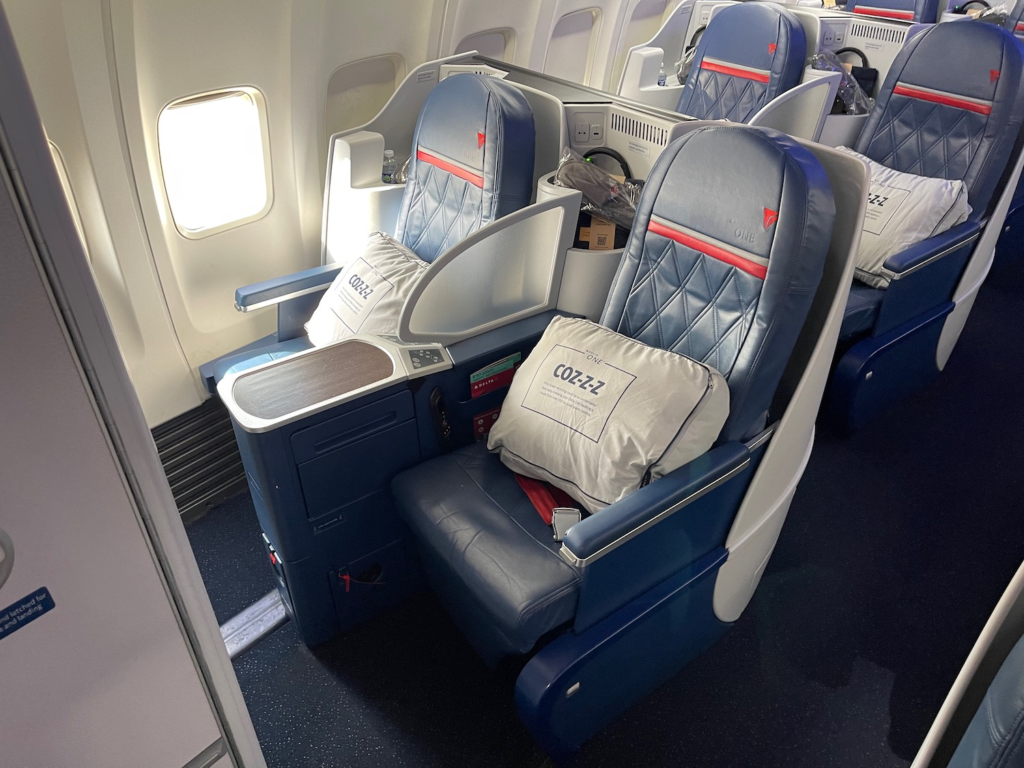
The overall cabin atmosphere differs dramatically between these two products. Delta One exists in a separate, dedicated business class cabin with its own entrance, creating an exclusive environment from the moment you board. On international widebody aircraft, the cabin typically features subdued lighting, mood setting, and a more private atmosphere with enclosed suites. Delta first class, by contrast, occupies the front rows of the main cabin. While you’re still in a premium section, the open layout means you’re more aware of the broader aircraft environment—including activity from the main cabin behind you. The trade-off? First class often feels more sociable and accessible, which some travelers actually prefer for shorter flights.
Noise levels tell a revealing story. Delta One cabins on long-haul aircraft benefit from their forward position and enclosed suite design, creating a noticeably quieter environment. Domestic first class experiences more ambient noise from the main cabin, though it’s still considerably calmer than economy.
The boarding experience matters too. Delta One passengers typically board first and have time to settle in before the main cabin boards. First class boards shortly after, but the proximity to economy means you’ll experience more aisle traffic during the boarding process.
Cost Analysis and Value for Money
The pricing gulf between these products can be staggering—and understanding whether you’re getting fair value requires looking beyond simple dollar amounts. Delta business class on transcontinental routes typically commands a 300-500% premium over domestic first class, with prices often reaching $2,000-4,000 for one-way tickets versus $400-800 for first class on similar routes.
However, the value equation shifts dramatically when using miles or upgrades. Delta SkyMiles members can often upgrade to first class for 15,000-25,000 miles, while Delta One requires 50,000-100,000 miles depending on fare class and availability. For cash fares, business class pricing makes most sense on routes exceeding 6 hours, where lie-flat seats and premium service justify the cost difference.
The sweet spot for value? Short transcontinental flights under 4 hours often favor first class, where the enhanced food and beverages provide 70-80% of the business class experience at a fraction of the cost. On overnight redeyes or international connections, the lie-flat bed alone justifies business class premiums for most travelers—particularly business passengers who need to arrive refreshed and productive.
Real-World Scenarios and Use Cases
The choice between these products becomes clearer when you map them to specific travel situations. Understanding which cabin fits different scenarios helps you make smarter booking decisions based on your actual needs rather than marketing hype.
For cross-country business trips—say, Atlanta to Los Angeles—Delta One’s lie-flat seats transform the five-hour flight into a productive or restorative experience. A consultant catching an evening departure can work through dinner, then sleep horizontally and arrive refreshed for an 8 AM client meeting. First class on the same route offers comfort, but you’re still arriving in a slightly scrunched position after trying to nap semi-reclined.
Short regional hops under two hours tell a different story entirely. A 90-minute Atlanta-to-Nashville flight in first class provides the meaningful upgrades—priority boarding, better food, and more space—without the premium becoming excessive. Delta One would be overkill here; you’d barely finish your pre-departure beverage before beginning descent. International routes create the strongest case for Delta One’s premium features. Ten-plus hours to Europe or Asia in a standard recliner becomes grueling, while a proper suite with full bed makes the journey manageable. For leisure travelers on milestone trips, the investment in long-haul comfort often proves worthwhile—arriving rested matters more when vacation days are limited.
Limitations and Considerations
Not every Delta flight offers the full premium experience you might expect—and understanding these limitations prevents disappointing surprises at the gate. The product you book doesn’t always match what you’ll experience onboard.
The most significant consideration is aircraft variability. Delta operates hundreds of planes across its domestic network, and many older aircraft still feature outdated recliner seats in first class rather than the newer cushioned designs. You might book “first class” expecting modern amenities only to board a plane with decade-old interiors. Route research matters—the A220 consistently delivers newer products, while older 737s often disappoint.
Regional flights present another limitation. Short-haul routes under 90 minutes rarely justify premium spending, as service is typically limited to a beverage and small snack regardless of cabin. The seat itself provides the primary value differential.
International considerations also matter. Delta’s business class competes globally, but doesn’t crack the top ten worldwide rankings for premium products. If you’re comparing Delta to Middle Eastern or Asian carriers on long-haul routes, the gap becomes apparent—particularly in dining quality and suite privacy.
Availability poses practical challenges too. Premium inventory releases inconsistently, and upgrade waitlists can leave you in economy despite status.
Key Delta First Class Vs Business Class Takeaways
The choice between Delta First Class and Delta One isn’t about which is “better”—it’s about matching the right product to your specific travel needs. For flights under five hours, domestic First Class delivers excellent value with comfortable seating, elevated dining, and premium service at a fraction of the cost. For transcontinental or international journeys, Delta One’s lie-flat suites and enhanced amenities justify the premium investment.
The clearest decision factor is route distance. Domestic First Class works brilliantly for business travelers making frequent short hops, while Delta One becomes essential for overnight flights where sleep quality directly impacts your arrival readiness. Budget-conscious travelers can leverage upgrade certificates and flash sales to experience premium cabins at reduced rates.
Delta’s onboard experience continues evolving with seat retrofits and service enhancements across both cabins, making either option increasingly competitive with rival carriers. The key is understanding your priorities—whether that’s workspace functionality, sleep comfort, dining quality, or simply getting more legroom without breaking the bank.
Your next premium cabin booking should start with your flight duration, then factor in your budget flexibility and specific comfort requirements. That focused approach transforms what seems like a confusing choice into a straightforward decision that enhances your travel experience.