Both Allegiant Air and Frontier Airlines promise rock-bottom fares, but the real question isn’t which ticket looks cheaper online—it’s which one actually costs less after you’ve added baggage, picked a seat, and survived the booking gauntlet. If you’ve ever watched a $39 fare balloon to $150 at checkout, you know the drill.
This isn’t another surface-level airline comparison. We’ve analyzed Department of Transportation data, dissected fee structures, and examined everything from seat pitch to credit card perks. Whether you’re a frequent flyer chasing loyalty points, a parent wrangling car seats, or a budget traveler who just wants to sit without paying extra, this guide breaks down which ultra-low-cost carrier actually delivers value—and which one leaves you stranded when plans go sideways.
Executive Summary: A Head-to-Head Overview of Ultra-Low-Cost Carriers
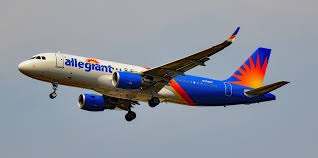
Allegiant Air and Frontier Airlines operate on similar business models: stripped-down base fares with fees for nearly everything else. Both airlines target leisure travelers willing to trade frills for savings, but their approaches differ in meaningful ways.
Allegiant’s Strategy: Point-to-point service connecting small cities to vacation destinations, with flights typically operating only a few days per week. The airline focuses on leisure routes with minimal competition, allowing them to charge premium fees on top of low base fares.
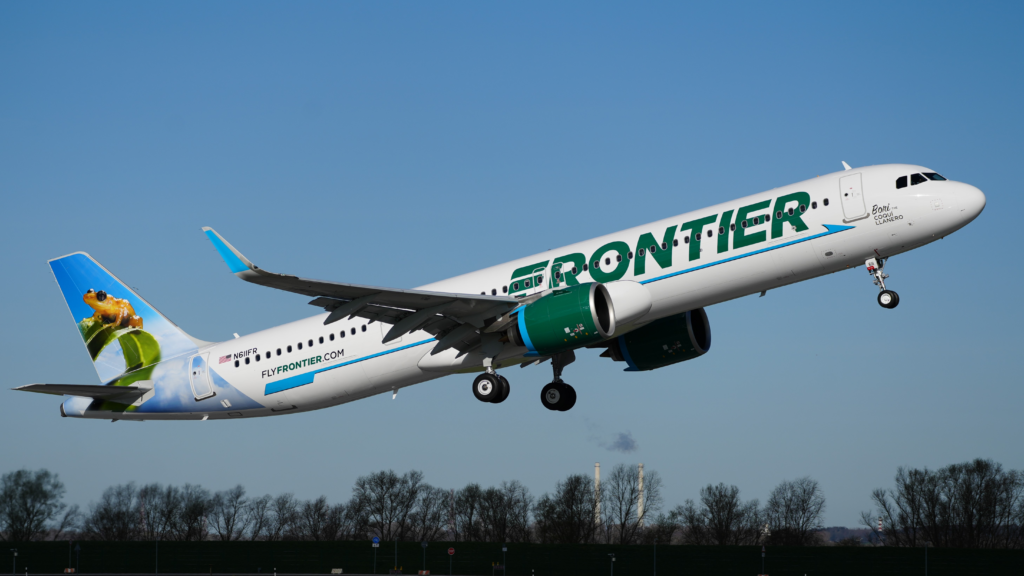
Frontier’s Strategy: A more traditional hub-and-spoke network with higher flight frequency and broader route coverage. Frontier operates from major airports and competes directly with legacy carriers on many routes.
The key distinction? Allegiant often represents your only nonstop option on a route, while Frontier typically offers multiple daily flights with more rebooking flexibility. This difference becomes critical when weather or mechanical issues disrupt travel plans.
The Real Cost: Breaking Down Base Fares vs. Ancillary Fees
Base fares tell only part of the story. Here’s where your “cheap” ticket gets expensive:
Frontier’s Fee Structure
Personal Item: Free (14″H × 18″W × 8″D, must fit under the seat)
Carry-On Bag: Ranges from approximately $30-$60 depending on when purchased (cheapest at booking, most expensive at gate). Size limit: 24″H × 16″W × 10″D, under 35 lbs.
Checked Bag: First bag typically $30-$50 at booking, increasing closer to departure and at airport. Limit: 62 linear inches, 40 lbs.
Seat Selection: Free assignment at check-in if you skip pre-selection, or $5-$50+ for advance selection depending on row and timing
Frontier’s bundle options (Economy, Premium, Business) can reduce per-item costs if you need multiple add-ons, but these bundles eliminate change fees—a significant value if your plans are uncertain.
Allegiant’s Fee Structure
Personal Item: Free (8″H × 14″W × 18″D)
Carry-On Bag: $10-$75 per segment depending on route and purchase timing
Checked Bag: Varies by route, up to four bags per passenger allowed (80 linear inches, 50 lbs each)
Seat Selection: $0-$80 depending on seat type and timing
Electronic Carrier Usage Charge: $22 per person, per segment (baked into online and call center bookings)
That $22 Electronic Carrier Usage Charge is Allegiant’s most controversial fee. A round-trip ticket automatically includes $44 in booking fees per passenger before you’ve added a single bag. Families of four face an extra $176 in booking fees alone.
Real-World Cost Example:
Base fare to Las Vegas: $59 (one-way)
- Electronic Carrier Usage Charge: $22
- Carry-on bag: $35
- Seat selection (standard): $15
Actual ticket price: $131
The advertised $59 fare more than doubles once mandatory and practical add-ons are included. Frontier’s structure follows a similar pattern, though without the $22-per-segment booking fee.
On-Time Performance and Reliability: Comparing DOT Cancellation Data
Reliability matters when you’re booking a vacation with hotel reservations and rental cars on the line. Department of Transportation data from 2024 reveals meaningful differences:
December 2024 Performance
Allegiant Air:
On-time arrival rate: 71.8%
Cancellation rate: 1.4%
Frontier Airlines:
On-time arrival rate: 75.0%
Cancellation rate: 1.6% (tie for second-highest among major carriers in December)
September 2024 Performance
Allegiant Air:
On-time arrival rate: 81.0%
Cancellation rate: 2.3% (highest among major carriers)
Frontier Airlines:
On-time arrival rate: 74.8% (lowest among major carriers)
Cancellation rate: 1.6%
Full Year 2024
For the full calendar year 2024, both airlines posted an on-time arrival rate of approximately 78%, below the industry average but within the range typical for ultra-low-cost carriers. The annual cancellation rate for both hovered around 1.4-1.6%, higher than legacy carriers but not drastically so.
What This Means for You:
Both airlines experience operational challenges, particularly during peak travel periods. Allegiant’s less frequent flight schedules amplify the impact of cancellations—if your twice-weekly flight is cancelled, your backup option might be three days away. Frontier’s higher frequency provides more rebooking opportunities, though you’ll likely pay change fees if the disruption isn’t airline-caused.
Neither airline guarantees compensation, meals, or hotel accommodations for delays or cancellations within their control, unlike the commitments major carriers have made under DOT pressure.
Seat Comfort and Legroom: The Tall Passenger’s Survival Guide
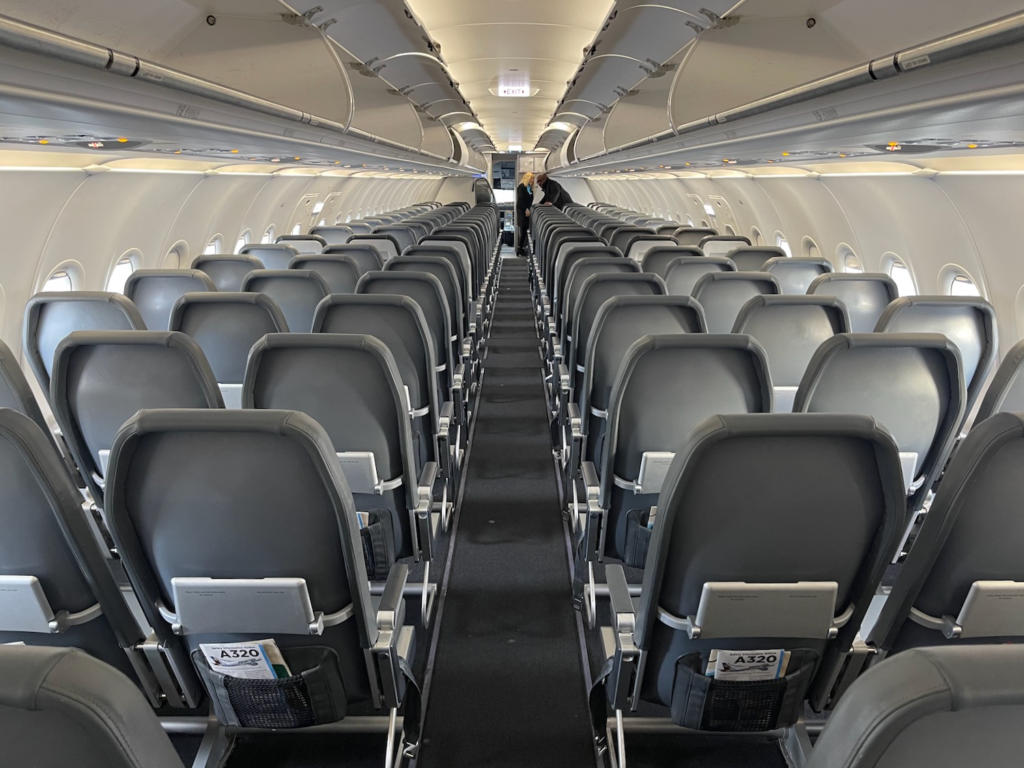
Budget airlines are notorious for tight quarters. Here’s what you’re actually getting:
Standard Economy Seats
Both Allegiant and Frontier operate all-Airbus fleets (primarily A320 family aircraft) with similar standard seat configurations. Industry-standard seat pitch for ultra-low-cost carriers typically ranges from 28-30 inches—noticeably tighter than the 31-32 inches common on legacy carriers.
For passengers over 6 feet tall, these seats become uncomfortable on flights longer than 90 minutes. Neither airline publishes exact seat width measurements, but Airbus A320 family aircraft typically feature seat widths around 17-18 inches in standard configurations.
Premium Seating Options
Frontier:
Offers “Stretch” seating with additional legroom in select rows. Pricing varies by route and timing.
Allegiant:
Offers “Legroom+” and “Allegiant Extra” seats. Allegiant Extra provides approximately seven additional inches of legroom plus priority check-in, priority boarding, and guaranteed overhead bin space.
On a 2-4 hour flight, paying $20-$40 extra for legroom can mean the difference between arriving stiff versus merely tired. For tall passengers, this isn’t a luxury—it’s a practical necessity. Budget accordingly when comparing base fares.
Missed Flights and Rebooking: Evaluating Network Connectivity and Recovery Options
This is where Allegiant and Frontier diverge most sharply.
Frontier’s Network Advantage
Frontier operates a hub-and-spoke network from airports like Denver, Las Vegas, Orlando, and Philadelphia. Multiple daily flights on most routes mean if your 9 AM flight is cancelled, there’s often a 1 PM or 6 PM option the same day. Frontier also has limited interline agreements with other carriers, though don’t expect seamless rebooking partnerships like you’d find with legacy airlines.
Allegiant’s Schedule Constraints
Allegiant’s point-to-point service often means just 2-3 flights per week on a given route. Miss your Tuesday flight and you might wait until Friday for the next departure. Allegiant has virtually no interline agreements, so if your flight is cancelled, you’re rebooking on Allegiant only—or buying a new ticket on another carrier at last-minute prices.
Missed Connection Reality:
Neither airline offers generous missed-connection protection. If you book separate tickets (a flight to a hub city, then Allegiant/Frontier onward), you’re on your own if the first flight delays and you miss the connection. Always build in several hours of buffer time or book everything on one itinerary.
For travelers with inflexible schedules (work commitments, cruise departures, special events), Frontier’s higher frequency provides crucial backup options that Allegiant simply can’t match.
Flexibility and Changes: Comparing Post-24 Hour Refund and Credit Policies
Both airlines offer 24-hour risk-free cancellation if you book at least seven days before departure. After that window closes, policies diverge significantly.
Frontier’s Change/Cancel Policy (Without Add-Ons)
Change fees:
- 60+ days before departure: $0
- 59-7 days before: $49 per person, per direction
- 6 days or less: $99 per person, per direction
Cancel fees:
$99 per person, per direction at any time
If you cancel, you receive a travel credit minus the $99 fee and certain carrier charges. Credits expire one year from original booking date.
With Economy, Premium, or Business Bundle:
No change or cancel fees at any time. You pay only fare difference if your new flight costs more.
Allegiant’s Change/Cancel Policy (Without Trip Flex)
Changes and cancellations must be made at least seven days before departure. Within seven days, no changes allowed and no credit issued unless you purchased Trip Flex.
Change fee: $25 per person, per segment, plus any fare difference
Cancel fee: Allegiant retains carrier charges and booking fees; remaining balance issued as credit
With Trip Flex ($15-40 per person):
- One-time change or cancellation allowed up to 1 hour before departure (72 hours for packages)
- No change or cancel fees, but you pay any fare difference
- Trip Flex itself is non-refundable
The Catch:
Allegiant’s seven-day cutoff is inflexible. Need to change plans six days out? You lose everything unless you bought Trip Flex upfront. Frontier’s $49-99 change fees are steep, but at least you retain credit value.
For travelers with unpredictable schedules, Frontier’s bundles or Allegiant’s Trip Flex are essential insurance policies. Without them, you’re gambling that nothing will force a last-minute change.
Family Travel Logistics: Handling Strollers, Car Seats, and Seating with Children
Traveling with kids adds layers of complexity to any flight. Here’s how each airline handles family-specific needs:
Baggage Allowances for Families
Both airlines allow:
- Strollers gate-checked for free
- Car seats brought on board (if traveling with a ticketed infant/child) or gate-checked for free
- No fees for mobility aids or assistive devices
This is one area where ultra-low-cost carriers match legacy airline policies. You won’t pay extra to bring essential baby gear.
Family Seating
Neither Allegiant nor Frontier guarantees families will sit together without purchasing seat assignments. DOT has proposed rules to ban family seating fees, but as of early 2025, these regulations haven’t taken effect.
Practical Reality:
If you don’t pre-purchase seats, you’ll likely be scattered across the aircraft. For families with young children, this means paying $10-30 per seat to sit together—an expense that quickly negates “cheap” base fares.
Some credit cards with travel benefits offer statement credits for seat selection fees, partially offsetting this cost.
Pre-Boarding
Both airlines offer pre-boarding for passengers traveling with children under age 2. This allows families to get settled before the boarding rush—a small but valuable perk when wrangling toddlers and car seats.
Loyalty and Rewards: Miles Redemption Value and Credit Card Perks
Loyalty programs matter for frequent travelers, but ultra-low-cost carrier programs lag far behind legacy airlines in value and flexibility.
Frontier Miles (Frontier’s Loyalty Program)
Earning: 10,000 qualifying miles ($1,000 in Frontier purchases) earns Elite Status
Award tickets: Start at 10,000 miles for a one-way domestic flight
Redemption value: Highly variable, but typically 0.5-1.0 cent per mile—significantly below the 1.5-2.0 cents typical of major airline programs
Frontier Airlines World Mastercard:
- Earn 5 miles per $1 on Frontier purchases
- Earn 1 mile per $1 on all other purchases
- Annual fee: typically $99 (varies by promotion)
- Benefits: Priority boarding, one free carry-on per flight
Allways Rewards (Allegiant’s Loyalty Program)
Earning: Points-based system through Allegiant credit card and purchases
Redemption: Points can be redeemed for Allegiant travel, car rentals, hotels, and attractions
Allegiant World Mastercard:
- Earn 3 points per $1 on Allegiant purchases
- Earn 2 points per $1 on dining
- Earn 1 point per $1 on all other purchases
- Benefits: Priority check-in, priority boarding, one free beverage per flight, buy-one-get-one round-trip companion fare with qualifying vacation package purchase
Redemption value: Varies widely; points are worth approximately 0.5-1.0 cent each depending on redemption method
The Credit Card Insurance Question
Both co-branded cards offer limited travel protections compared to premium travel credit cards. Crucially, neither program publishes transparent award charts, making it difficult to calculate whether accumulating miles/points provides better value than simply booking the cheapest cash fare each time.
For travelers who fly 2-3 times per year, the credit card annual fees often exceed the value of benefits earned. Frequent flyers (10+ segments annually) may break even or come out ahead, particularly if they use the companion fare benefit strategically.
Customer Satisfaction: Analyzing Baggage Handling and Complaint Rates
DOT data from 2024 provides objective measures of customer service quality:
Mishandled Baggage Rates
For 2024, the industry average mishandled baggage rate was 0.55% (0.55 bags per 100 checked).
Both Allegiant and Frontier publish operational data through DOT reporting, though detailed carrier-specific breakouts for mishandled baggage aren’t always highlighted in press releases. Based on available quarterly data, both carriers have historically performed near or slightly above industry averages for mishandling, meaning you’re marginally more likely to experience a delayed or lost bag compared to flying a legacy carrier.
Complaint Rates
DOT complaint data consistently shows Frontier among the carriers with the highest complaint rates per 100,000 passengers among major U.S. airlines. Allegiant also ranks above legacy carriers, though typically lower than Frontier.
Common complaints for both airlines include:
- Unexpected fees at airport check-in
- Difficulty reaching customer service
- Delays and cancellations without adequate rebooking assistance
- Disputes over baggage size requirements
What This Means:
Both airlines prioritize low fares over customer service. If something goes wrong—a lost bag, a cancelled flight, a billing dispute—expect long hold times and limited resolution options. This trade-off is baked into the ultra-low-cost model.
Final Verdict: Which Airline Wins for Your Specific Travel Style?
There’s no universal “better” choice—the right airline depends on your priorities.
Choose Frontier if:
- You need flexibility to change travel dates
- You’re flying routes with multiple daily flights
- You want bundle options that include carry-on, checked bag, and seat selection
- You can handle slightly higher complaint rates in exchange for better recovery options when flights are cancelled
- You value earning miles in a program with slightly broader redemption options
Choose Allegiant if:
- You’re booking well in advance with near-certain travel dates
- You’re flying to/from smaller cities where Allegiant offers the only nonstop service
- You’re comfortable with limited flight frequency and willing to risk multi-day delays if cancellations occur
- You can avoid or minimize baggage fees and have flexibility on seating
- You’re willing to purchase Trip Flex for change protection
For Tall Passengers:
Budget $20-40 extra per flight for premium legroom seats on either airline. Without this upgrade, flights over 2 hours become exercises in endurance.
For Families:
Expect to pay $10-30 per seat to sit together on either airline. Factor this into fare comparisons. Both airlines handle strollers and car seats reasonably well, but neither offers exceptional family-friendly service.
For Business Travelers:
Neither airline is ideal for business travel. Limited rebooking flexibility, no premium cabin, and inconsistent on-time performance make these carriers risky for time-sensitive trips. If you must use them for work, always build in buffer days and consider travel insurance that covers cancellations.
For Budget-Conscious Leisure Travelers:
Both airlines can deliver genuine savings if you pack light (personal item only), skip seat selection, and have flexible schedules. But the moment you need a carry-on bag, a specific seat, or any change to your itinerary, those “cheap” fares evaporate.
The Bottom Line:
Allegiant and Frontier aren’t competing on service quality—they’re competing on total cost for travelers willing to accept trade-offs. Calculate your real all-in price (base fare + baggage + seat + booking fees) before committing. Often, a “more expensive” fare on Southwest, JetBlue, or a legacy carrier ends up cheaper once you’ve added the necessities.
And remember: the cheapest ticket isn’t a bargain if you’re stranded in an airport because your once-weekly flight was cancelled and the next one isn’t until Thursday.