Choosing between Air Canada and British Airways for your next transatlantic journey isn’t as simple as picking the cheapest fare. Both airlines offer nonstop flights between major Canadian cities and London, but they differ dramatically in cabin comfort, loyalty program value, and those frustrating out-of-pocket costs that can turn a “great deal” into an expensive headache.
If you’re weighing Air Canada flights against British Airways for your UK-Canada route, you’re likely asking: Which has better business class? Whose loyalty program actually rewards you? And most importantly—which airline will get you there without breaking the bank?
Let’s break down everything from premium economy seat width to fuel surcharges, so you can make the smartest choice for your next trip.
Direct Routes: Air Canada vs British Airways for UK-Canada Flights
Air Canada operates the most extensive network between Canada and the UK, with daily nonstop service from Toronto, Montreal, and Vancouver to London Heathrow. You’ll also find seasonal routes from Calgary and Ottawa depending on the time of year.
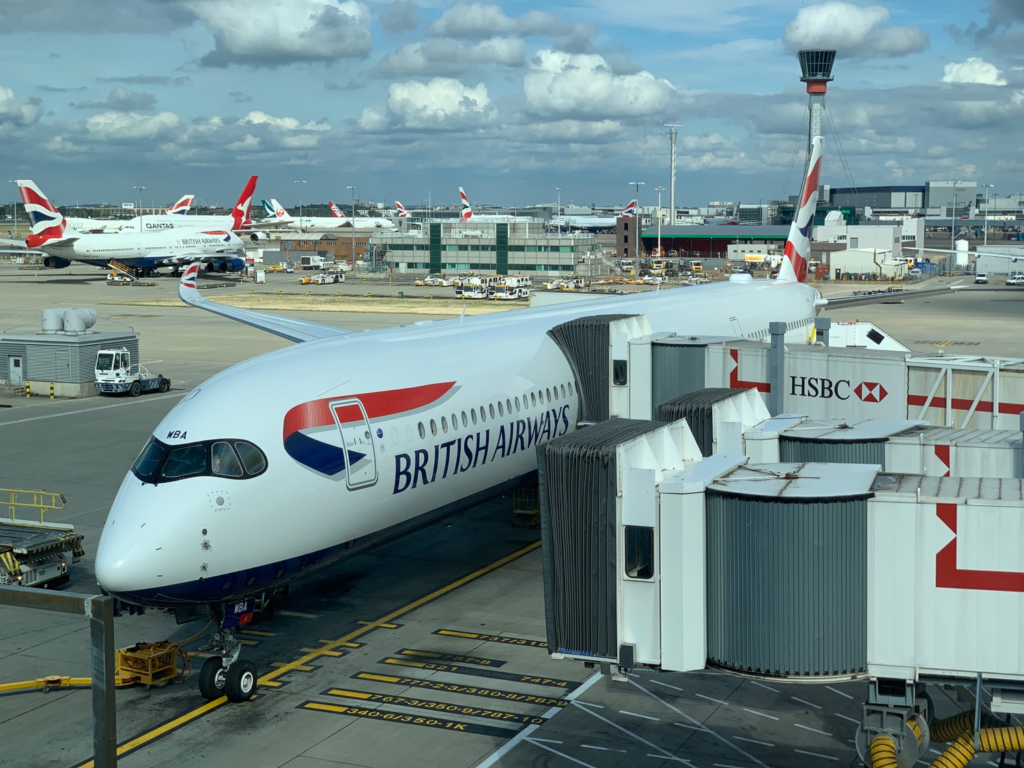
British Airways focuses its Canadian operations on three key cities: Toronto, Montreal, and Vancouver—all connecting through London Heathrow. While BA’s network is smaller, Terminal 5 at Heathrow offers streamlined connections to the rest of Europe and beyond.
Winner: Air Canada takes this round purely on route variety and frequency, especially if you’re based outside Toronto.
Loyalty Programs: Aeroplan vs Executive Club Value
Here’s where things get interesting—and expensive if you’re not careful.
Air Canada’s Aeroplan eliminated fuel surcharges on its own flights in 2020, a game-changer that makes award bookings far more affordable. You’ll typically pay 60,000–75,000 Aeroplan points for a one-way business class ticket from Canada to the UK, plus modest taxes around $150–200. Even better, Aeroplan allows one stopover for just 5,000 extra points, perfect for exploring another city en route.
British Airways Executive Club uses Avios as its currency, and while the program prices similar routes at around 60,000 Avios, the carrier-imposed surcharges are brutal. Expect to pay $500–850 in fees on top of your points for transatlantic business class—essentially paying half a revenue ticket.
BA does offer “Points Saver” redemptions where you can pay more points (up to 90,000) to reduce fees to around $350, but that still means redeeming Avios at a much lower value per point. The one bright spot? British Airways levies far lower fees on partner airlines like Aer Lingus (direct Toronto–Dublin flights cost around 52,000 Avios plus $200).
Winner: Aeroplan dominates here. Lower fees and the generous stopover policy make it the smarter choice for maximizing points value.
Cabin Experience: Economy, Premium Economy, and Business Class Compared
Air Canada vs British Airways Economy Class
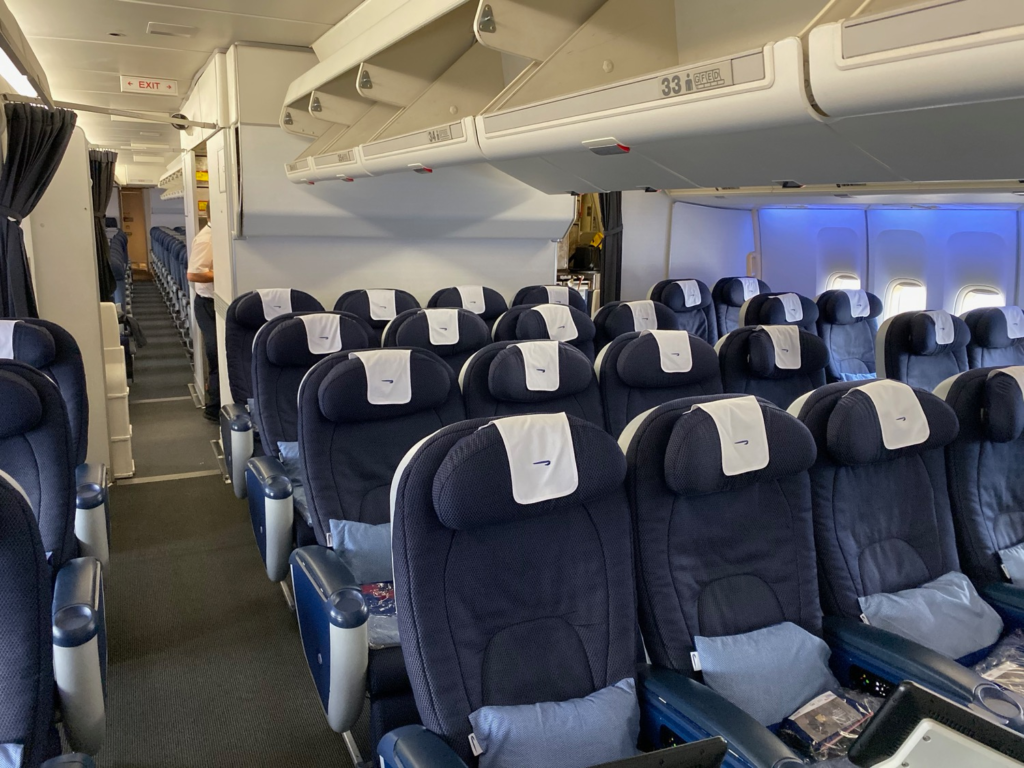
Both airlines offer similar economy experiences on long-haul 787s and A350s, with 31-inch pitch and roughly 17.5-inch seat width. Meals are comparable—forgettable but filling—and both provide personal seatback screens with decent entertainment libraries.
One critical difference: Air Canada’s Basic Economy fares (introduced January 2025 for North America routes) allow only one personal item. Your carry-on suitcase must be checked for a fee at the gate. British Airways’ “hand baggage only” fares include both a cabin bag (56 x 45 x 25cm) and a smaller personal item (40 x 30 x 15cm), though you’ll pay extra for checked luggage.
Air Canada vs British Airways Premium Economy
Air Canada’s premium economy offers 38 inches of pitch with seats that feel noticeably more spacious than economy. British Airways counters with similar legroom but slightly wider seats on newer A350s.
The real differentiator is pricing: Air Canada often charges significantly more for premium economy, whereas BA frequently offers competitive upgrade rates from economy.
Air Canada vs British Airways Business Class
This is where the two airlines diverge most dramatically.
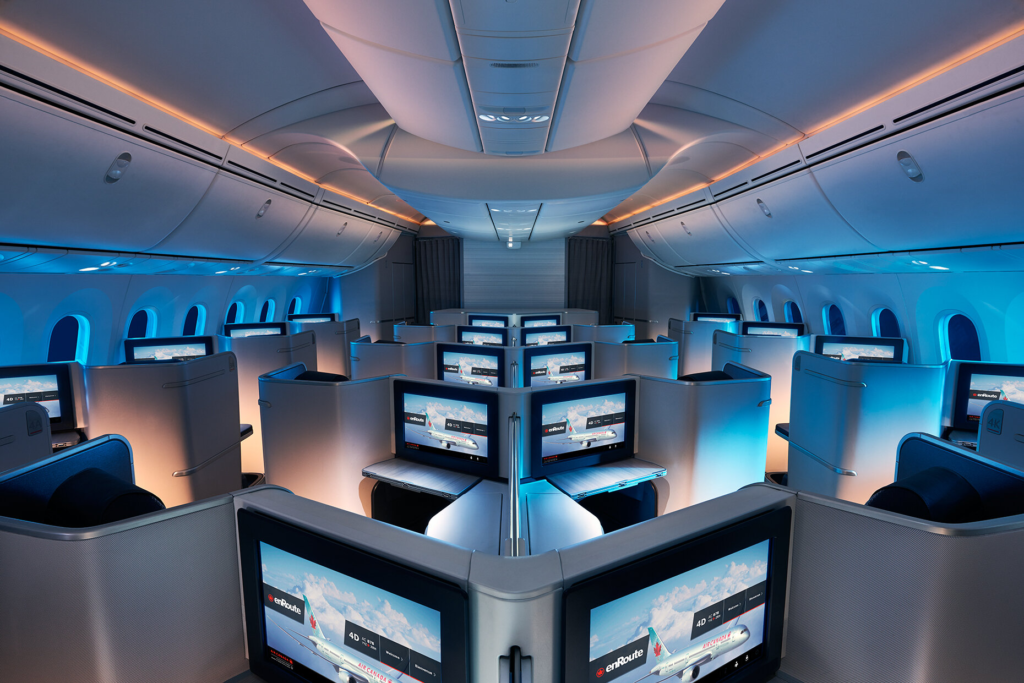
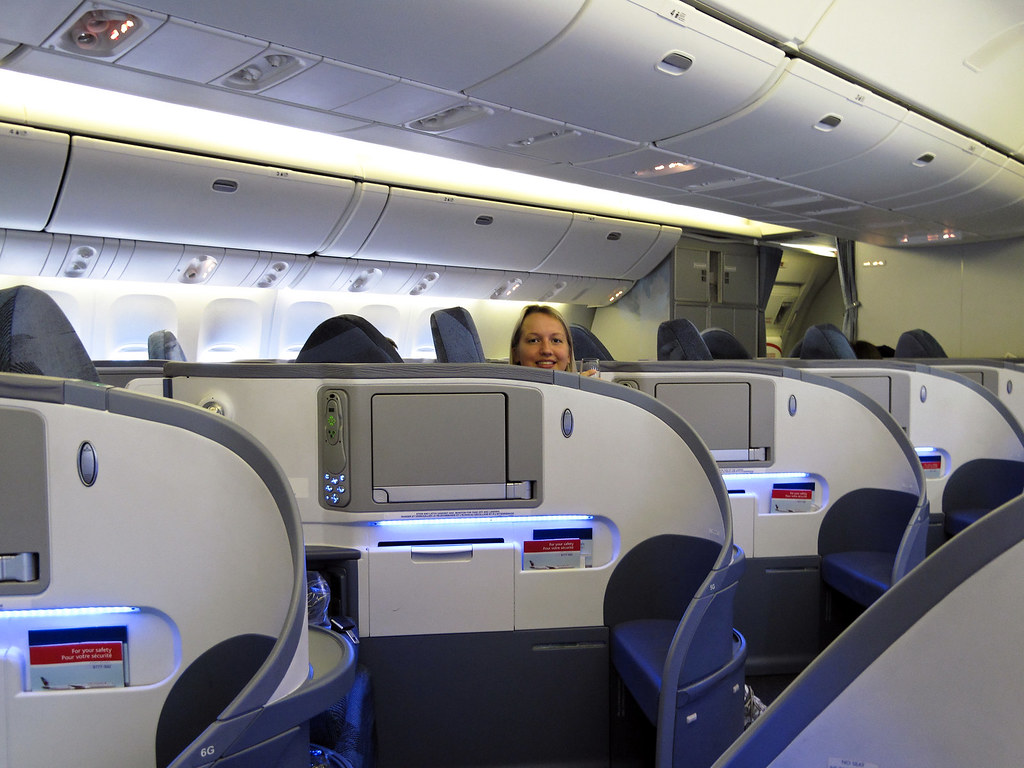
Air Canada flies reverse herringbone pods on its 787s—fully flat seats with direct aisle access for every passenger. The cabin feels modern and private, though the seats lack closing doors. You’ll get amenity kits, decent bedding, and à la carte dining on long-haul routes.
British Airways’ Club Suite features fully closing privacy doors, a major upgrade that transforms the business class experience. Available on newer A350s and retrofitted 777s, the Club Suite measures 79 inches when fully flat with 21-inch width. The door creates a genuine sense of personal space that Air Canada’s open pods can’t match.
Food quality? Both airlines deliver inconsistent catering, though BA’s short ribs and breakfast options edge ahead slightly.
Winner: British Airways Club Suite takes business class honors thanks to those privacy doors, but Air Canada’s pods remain excellent for passengers who don’t need a closed suite.
Ground Experience: Lounges and Hub Operations
Air Canada Signature Suite vs British Airways Galleries Lounge
Air Canada Signature Suite at Toronto Pearson is the airline’s flagship lounge, available to international business class passengers and top-tier Aeroplan elites. The space features à la carte dining with servers, comfortable seating, and a surprisingly calm atmosphere even during peak hours. Access remains exclusive enough that overcrowding is rare.
British Airways Galleries Lounge at Heathrow Terminal 5 is… functional. A 2025 review described the food as “raiding the ready meal section in the Tesco freezer aisle”—generous but low-quality buffet options with beige curry, fish cakes, and limp vegetables. The bar is self-service (you can request champagne, but it’s Heidsieck Blue Top, nothing special). Showers exist but feel sterile and hospital-like.
The lounge gets crowded between 1–4 PM when long-haul flights depart. Mornings and late afternoons offer better seating availability.
Winner: Air Canada Signature Suite delivers a noticeably superior ground experience.
Hub Comparison: Toronto Pearson vs London Heathrow
Toronto Pearson (YYZ) handles Air Canada’s international operations efficiently, with Canadians benefiting from automated passport control. Connections to US destinations are straightforward, though winter weather can cause delays.
London Heathrow (LHR) is massive and well-connected to Europe, the Middle East, and beyond. Canadians clear UK immigration quickly at e-gates. However, the UK Air Passenger Duty (APD)—a departure tax of up to $330 per person in business class—stings if your journey originates in London. You can avoid this entirely by starting your trip elsewhere in Europe and connecting through Heathrow.
Technical Details: Aircraft, WiFi, and Baggage
Aircraft: Air Canada primarily uses Boeing 787 Dreamliners on UK routes, while British Airways operates both 787s and newer Airbus A350-1000s. The A350 offers a quieter, smoother ride with better cabin pressure—passengers often report feeling less fatigued on arrival.
WiFi: Both airlines offer paid inflight WiFi on long-haul routes, with pricing ranging from $10–30 depending on the flight length and data package. Speeds are comparable (adequate for email and browsing, spotty for video calls), though neither airline publishes official speed benchmarks.
Baggage: Air Canada charges $35 for the first checked bag and $50 for the second on Basic and Standard economy fares within North America. British Airways includes checked baggage on most transatlantic fares but charges extra for Basic hand-baggage-only tickets. Both airlines cap checked bags at 50 lb (23 kg) with fees of $100+ for overweight items.
Connecting Passengers: North America–India and Stopover Options
For travelers heading to India from North America, Air Canada offers competitive routing through Toronto or Vancouver to Delhi with Star Alliance partners. The Aeroplan stopover rule (add 5,000 points) makes it easy to spend a few days in Canada en route.
British Airways connects through London to multiple Indian cities with partner airlines, but those fuel surcharges stack up quickly. If you’re booking with Avios, consider using a partner program like Cathay Pacific Asia Miles to book the same BA flights with 57% lower fees (around $375 instead of $850).
Winner: Air Canada’s stopover flexibility and cleaner award pricing make it the better choice for complex itineraries.
Operational Reliability: Winter Delays and Customer Service
Both airlines face weather challenges—Air Canada battles Canadian winters while British Airways contends with Heathrow fog and occasional labor disruptions.
Air Canada has improved on-time performance in recent years but still experiences winter delays at Toronto Pearson and Montreal. Customer service can be hit-or-miss during irregular operations.
British Airways generally maintains decent punctuality on long-haul routes, though short-staffing issues at Heathrow have caused occasional baggage delays.
Neither airline is perfect, but both manage transatlantic operations competently.
The Verdict: Which Airline Should You Choose?
Choose Air Canada if:
- You value loyalty program redemptions without sky-high fees
- You want flexible stopover options
- You prefer Toronto as your connection point
- You’re flying on Aeroplan points
Choose British Airways if:
- Privacy doors in business class matter to you
- You’re connecting through London to Europe or beyond
- You can book through a partner program to reduce fees
- You’re paying cash and find a competitive fare
For most travelers, Air Canada edges ahead thanks to Aeroplan’s superior value and lower out-of-pocket costs on award tickets. But if you’re splurging on a cash business class ticket or can stomach BA’s surcharges, those Club Suite doors deliver an undeniably premium experience.
The smartest move? Compare both airlines for your specific route and travel dates—and always check if Aeroplan or Asia Miles can book the same BA flight for fewer fees. Your wallet will thank you.